
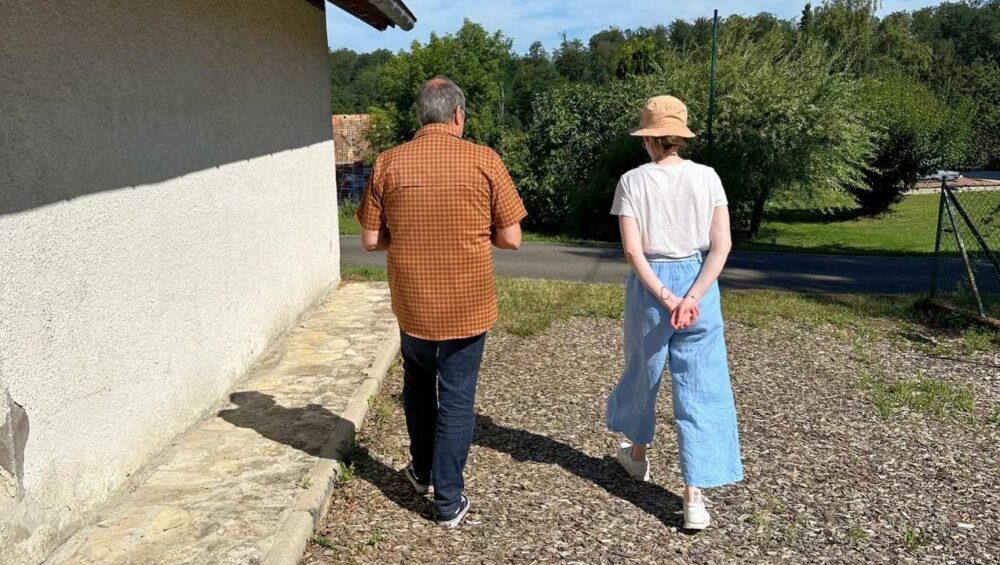
At our coworking space in Bern’s train station, we create a space for focused work, collaboration, and personal growth. We do this not only for our guests, but also for ourselves. One tool we use to achieve this is the Listening Walk.
We’ve mentioned this method before in an “Insight” post from our “Behind the Scenes” series. We like it so much that we’d like to dedicate an entire “Insight” post to our experience with the Listening Walk. It comes from the 9 Spaces methodology and fits perfectly with our approach to mindfulness and collaboration as equals.
Learning to Listen as Part of Modern Workplace Culture
A Listening Walk is a walk taken by two people. One person brings a specific question to discuss, while the other listens without commenting, judging, or interrupting. Pre-determined speaking intervals alternate with periods of intentional silence. There is no discussion, no small talk, and no immediate pressure to find a solution.
Especially in everyday work life, which is often characterized by meetings, emails, and quick responses, this format seems unusual at first. Irene describes our initial experiences very aptly: “Walking together in silence felt almost uncomfortable.” Silence is rarely expected in a professional context—especially in an environment where communication is considered a key skill.
We use the Listening Walk to discuss questions about the company, the team, ourselves, and our work. What’s on your mind right now? What do you think would help the team? What have you been successful at—and what not—over the past six months? Where would you like more support, and where do you see yourself within the team? It’s like a performance review, but without goals, spreadsheets, or evaluations.
From Discomfort to Quality Listening
After one or two Listening Walks, that feeling changed significantly. The setting became more familiar, walking together felt more natural, and listening freely also became easier. Irene describes how this helps build and deepen mutual trust. This trust isn’t loud or spectacular, but rather quiet, supportive, and lasting.
With a little practice in patience and calm, we’ve managed to consciously set aside time for this and to recognize and appreciate the quality of these conversations. This form of exchange is especially valuable in a self-organized team structure without a hierarchy.
The combination of movement and thinking also has a noticeable effect on the quality of the conversations. Tanja finds that walking instead of sitting is a pleasant change from the typical workday. Instead of getting lost in superficial small talk, an in-depth exploration of a specific question takes place. It’s easier to give thoughts room to breathe. This works best in nature, where quiet places foster clarity.
Not being allowed to communicate—and that is exactly why we learn
What Thomas finds particularly fascinating is the part of the Listening Walk that focuses on conscious non-communication. Refraining from commenting, judging, or intervening is challenging. Especially in our day-to-day work lives, we’re trained to react quickly, offer solutions, or categorize thoughts.
For Michael, this is precisely what makes it so liberating. Since no verbal response is expected during a listening walk, he can focus entirely on the person he’s with. This clear rule helps him set aside his own opinions and prejudices and listen with less internal resistance. His listening becomes more present, more open, and less overshadowed by internal reactions.
On a Listening Walk, we listen without an agenda and allow for pauses without trying to fill them. This experience cultivates a skill that has an impact far beyond the walk itself. It also helps us learn to listen in our daily lives without immediately commenting or judging. This changes conversations within the team, with guests, and often our perspective on ourselves as well.
Self-awareness Instead of a Focus on Efficiency
The Listening Walk is not a traditional efficiency tool. It doesn’t produce to-do lists or immediate decisions. Instead, it fosters something else: self-reflection, trust, and depth. As Tanja puts it, with every walk, you get to know yourself a little better.
This quality is a great fit for zentroom. As a coworking space located right inside the Bern train station, we combine professional working conditions with a culture of collaboration. People come for the central location, the tranquility, and the quality—and they stay for the atmosphere.
The Listening Walk is an example of what work can be like: calm, focused, and human.